
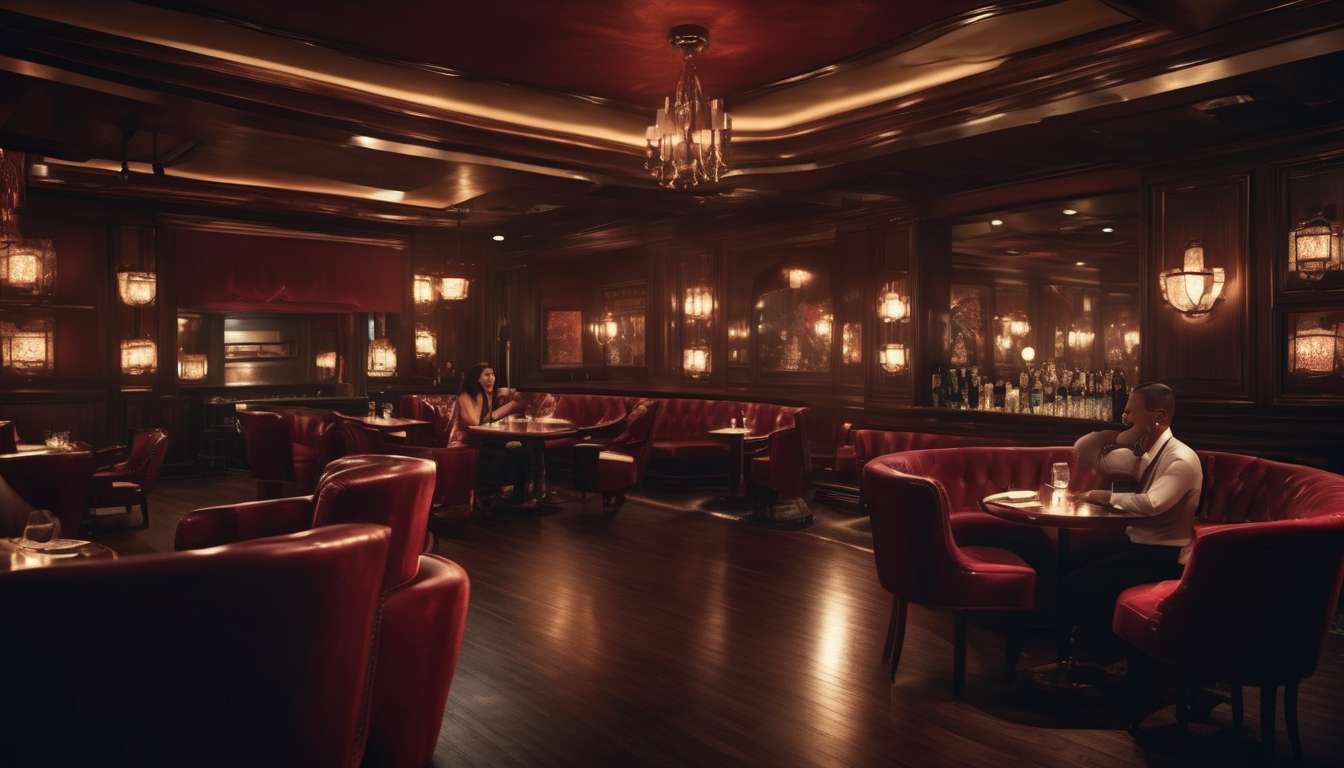
Velvet-rope policies and hospitality training programs have moved from upscale restaurants and boutique hotels into the rooms and lounges of exotic-dancing clubs, reflecting broader shifts in service expectations.
Municipal licensing changes, higher guest-service standards, and a growing focus on safety and customer experience are reshaping how clubs operate and how performers engage with patrons.
Policy updates, PR efforts, and industry-led certifications are positioning clubs as destinations that prioritize respect, professionalism, and curated atmospheres.
Dancers and managers are adapting to new guidelines by embracing structured booking systems, clearer codes of conduct, and improved staff support.
- Structured booking systems help manage customer flow and provide predictable work rhythms for performers.
- Codes of conduct clarify acceptable interactions and set boundaries for both staff and patrons.
- Improved staff support can include on-site security, counseling resources, and clearer complaint procedures.
These changes require balancing artistic autonomy and economic pressures.
- Artistic autonomy: Performers may resist rules that feel limiting to creative expression or stagecraft.
- Economic pressures: New standards can introduce costs (training, certification, infrastructure) that affect club revenue and performers’ earnings.
Patrons’ expectations are shifting toward more courteous interactions and sanitized environments.
- This can improve safety and comfort for both staff and customers.
- It can also alter the spontaneity and rawness that some patrons and performers associate with club culture.
The central question is whether hospitality’s rise elevates the work environment or introduces constraints that fundamentally change club culture.
A nuanced view recognizes both possibilities: hospitality practices can enhance safety, professionalism, and respect, but they may also impose limits that reshape the interpersonal and artistic dynamics at the heart of the industry.
Changing Service Expectations
Clubs are rethinking their service model to balance entertainment, safety, and hospitality.
We prioritize consistent, welcoming experiences that make regulars and newcomers feel included.
Staff training focuses on reading rooms, managing boundaries, and delivering hospitality without sacrificing performer-support systems that keep shows sustainable and respectful.
We update policies to set clearer expectations on interactions, tipping, and private areas so everyone knows what’s acceptable.
Practical venue changes create a predictable, warm environment:
- Slip-resistant flooring
- Visible staff presence
- Clear signage
- Consistent customer-facing language
These choices help patrons relax and performers do their best work, which builds loyal communities around our venues.
We gather feedback regularly so service offerings can be fine-tuned and adjustments remain community-driven.
Ultimately, by pairing compassionate hospitality with concrete performer-support measures, we create spaces where people belong, feel safe, and want to return.
Licensing and Regulation Shifts
Many cities are tightening licensing requirements and changing zoning rules, so we’re adapting compliance strategies to keep our venues legal, safe, and community-friendly.
Actions we’re taking:
- We’re working together to understand new regulation timelines.
- We submit accurate applications and meet health and safety inspections so our clubs remain consistent members of their neighborhoods.
- We prioritize transparent communication with local officials and neighbors to show how professional hospitality practices reduce nuisance complaints and strengthen community ties.
We’re aligning internal policies with licensing mandates to protect performers and staff.
Policy components:
- Clear contracts.
- Incident reporting procedures.
- Performer-support resources, now standard across venues.
We’re pooling knowledge and sharing best practices to build a supportive network.
Benefits of cooperation:
- More effective navigation of fees, renewals, and zoning appeals.
- Maintenance of operational standards without sacrificing the sense of belonging that keeps performers and patrons coming back.
Ongoing commitment:
- We’ll keep monitoring legal shifts and updating procedures so compliance enhances both safety and the welcoming atmosphere we want to sustain.
Hospitality Training Uptake
We’re rolling out targeted training programs to ensure staff and dancers consistently deliver safe, welcoming service and understand updated compliance and guest-relations expectations.
We’ve designed concise modules that balance hospitality fundamentals with practical guidance on meeting new regulation standards. These modules are delivered in shifts so everyone can attend without losing income.
We’re creating peer-led sessions to build trust, normalize questions, and reinforce a sense of belonging across roles.
We’re tracking uptake with simple metrics:
- Completion rates
- Short feedback surveys
- Observed behavior changes
This lets us iterate quickly based on real results.
We offer optional refresher workshops and accessible resources on:
- Performer-support
- De-escalation
- Guest-accommodation
These resources help staff feel confident and valued.
We’re partnering with local health and safety advisors to ensure content reflects current legal expectations while centering dignity for performers and patrons.
We’re committed to transparent communication about training goals and outcomes and are inviting regular input so the program grows with our community’s needs.
Codes of Conduct Emergence
We are introducing clear codes of conduct that outline acceptable behavior for staff, dancers, and patrons to keep everyone safe and respected.
These codes create shared guidelines so everyone knows what’s expected: respect, consent, and fairness.
Hospitality is framed as a commitment to dignity rather than only service — ensuring predictable interactions and consistent standards across shifts and venues.
We align internal practice with local regulation to protect rights and reduce ambiguity, and we maintain regular review cycles so policies stay relevant.
Policies use accessible language and concrete examples to invite every team member to:
- adopt the codes,
- report concerns without fear, and
- participate in shaping norms.
Accountability is emphasized and paired with support so corrective steps are transparent and restorative where possible.
The approach fosters belonging by centering clear expectations and mutual care; when rules are fair and consistently applied, people feel safer and more included.
These codes are a living foundation for respectful workplaces that value both service excellence and performer-support.
Performer Support Systems
Establish practical, accessible support systems for dancers.
Create a central performer-support hub where everyone can find vetted local clinics, counseling options, and on-call legal advisors familiar with club-related regulation.
Schedule regular wellness check-ins and confidential drop-in hours so people can get help without stigma.
Train managers and staff in trauma-informed, hospitality-focused approaches that prioritize safety and respect.
Adopt transparent referral pathways for crises, with quick access to emergency transport and secure communication channels.
Set up peer-mentorship networks so newer performers feel welcomed and experienced dancers can share practical knowledge about staying safe and healthy while working.
Collect anonymous feedback to refine services and ensure they meet real needs.
Commit to sustainable funding for these resources, recognizing that strong performer-support systems make venues safer, more inclusive, and more professional for everyone who belongs here.
Balancing Art and Rules
We’ll define clear, enforceable rules that still leave room for creative expression, so dancers can safely push artistic boundaries without confusion or unnecessary restriction.
We set standards that prioritize hospitality alongside artistic integrity, so every member feels seen and respected.
We craft regulation that’s transparent and consistent, explaining why rules exist and how they protect performers and patrons alike.
We build performer-support into policies, offering training, feedback channels, and access to resources so creativity isn’t stifled by uncertainty.
We encourage collaborative rule-making, inviting dancers to shape boundaries so guidelines reflect lived experience and artistic needs.
We monitor outcomes and adjust policies when rules unintentionally limit expression or safety, staying accountable to the community.
We communicate changes clearly, fostering trust and a sense of shared ownership.
We balance enforcement with empathy, ensuring consequences are fair and rehabilitative when possible.
We create an environment where hospitality, safety, and artistic freedom coexist, and where everyone who contributes feels like they belong and can thrive.
Patron Experience Redefined
We’ll redefine the patron experience to prioritize safety, respect, and memorable engagement while preserving the club’s artistic spirit.
We want every guest to feel welcomed, seen, and part of a community that values dignity as much as delight.
By embedding hospitality into every touchpoint — from entry greeting to seating and bar service — we set a tone that invites connection without compromising boundaries.
We’ll align our practices with clear regulation to protect patrons and performers alike, communicating rules calmly and consistently so everyone knows what to expect.
Our staff are trained to diffuse conflict, guide respectful behavior, and create moments that feel intimate yet safe.
We’ll center performer-support in policies and programming, ensuring artists have agency, comfortable working conditions, and prompt channels to report concerns.
Together, we’ll craft nights that celebrate artistry, foster belonging, and uphold standards that keep community members returning with trust and enthusiasm.
Economic Impacts and Costs
We’ll assess the direct and indirect costs—staffing, security, licensing, and marketing—and project how they affect revenue, profit margins, and local economic spillovers.
Direct and indirect costs include:
- Staffing (wages, benefits, scheduling)
- Security (on-site personnel, equipment)
- Licensing (fees, permits)
- Marketing (campaigns, branding)
We see hospitality investments—training, improved service flow, and upgraded facilities—raise operating costs up front but often boost average spend and repeat patronage.
Hospitality investments effects:
- Upfront increase in operating costs for training and capital upgrades
- Higher average spend per customer and improved customer retention
- Longer-term revenue gains that can offset initial expenses
Tightening regulation can add fees and compliance staffing, yet clear rules reduce uncertainty and can attract community support and responsible customers.
Regulation trade-offs:
- Added costs: permits, inspections, dedicated compliance staff
- Benefits: lower business uncertainty, improved public perception, potential community backing
Performer-support measures, like fair scheduling and health resources, increase payroll or benefits costs, but they lower turnover and improve performance quality, which sustains income streams.
Performer-support outcomes:
- Higher ongoing personnel costs (payroll, benefits)
- Reduced turnover and recruiting costs
- Improved show quality and customer satisfaction, supporting stable revenues
Security and licensing remain nonnegotiable expenses; we model them as fixed or semi-fixed, affecting margins more for smaller clubs.
Security/licensing impact by size:
- Small venues: larger margin impact due to fixed-cost burden.
- Larger venues: costs scale but represent a smaller share of revenue.
Marketing to signal upgraded hospitality costs money but broadens reach and can produce multiplier effects for nearby businesses.
Marketing and spillovers:
- Investment in marketing increases customer reach and awareness
- Successful signaling of quality can raise prices and attract different customer segments
- Positive multiplier effects for neighboring businesses and local employment
Together, these elements shift pricing strategies and profit expectations; when we plan carefully, the net effect often strengthens local economic ties and builds a more resilient, inclusive nightlife sector.
Integrated planning conclusions:
- Rebalance pricing to reflect higher service quality while remaining competitive
- Factor fixed/semi-fixed compliance costs into break-even and margin analyses
- Invest in performer welfare and hospitality to reduce churn and enhance lifetime customer value
- Use targeted marketing to capture new demand and amplify local economic multipliers
What impact do these hospitality changes have on the music selection and DJ practices at exotic dancing clubs?
We’re asking how hospitality changes shape music choices and DJ habits.
We favor smoother, crowd-friendly sets to create welcoming vibes, blending familiar hits with curated transitions.
We coach DJs to read room energy, lower abrupt shifts, and time climaxes to service flow.
We prioritize cleaner mixes, consistent volume, and clearer mic etiquette so performers and patrons feel respected, included, and comfortable throughout the night.
How do changes in hospitality standards affect the availability and price of private rooms or VIP services?
We’ve noticed hospitality upgrades often shift private room availability and pricing.
We’ll offer more curated VIP experiences, so rooms get booked faster and demand pushes prices up.
We’ll add tiered packages, clearer service inclusions, and reservation windows to keep access fair.
We’ll also prioritize loyal guests with memberships and discounts, so our community feels welcomed while we balance exclusivity, capacity, and higher operational costs.
Are there new policies around photographing or recording performers that differ from previous club rules?
We’ve updated policies on photographing and recording performers to tighten previous rules.
Key changes include:
- No-photo/no-recording zones are being enforced.
- Performer consent required: Any permitted captures must have explicit performer consent.
- Clearer signage and staff reminders to inform guests of the rules.
- Secured, consent-based VIP photo options are being offered for those who want photos.
- Stronger penalties for violations, including ejection and possible bans.
Our approach to communicating these changes:
- We’re delivering the message warmly so everyone feels respected, safe, and included.
- Staff will explain the policies courteously and be available to answer questions.
- Signage and reminders will be clear and friendly to help guests enjoy the venue while complying with the rules.
Conclusion
You’re seeing how hospitality standards are reshaping exotic dancing clubs.
Clarity and structure are increasing.
- Clearer rules and written policies define acceptable behavior for patrons and staff.
- Trained staff enforce those policies consistently, reducing ambiguity and conflict.
Performer safety and support are prioritized.
- Support systems (security, reporting channels, health resources) protect performers.
- Measures are designed to preserve performers’ autonomy and artistic expression.
The atmosphere becomes safer and more respectful while remaining vibrant.
- Guests enjoy a more comfortable environment thanks to improved service standards.
- The clubs maintain energy and entertainment value even as expectations rise.
Costs and regulations may increase, but the industry gains sustainability.
- Owners face higher operating costs and compliance requirements.
- Performers and patrons benefit from predictable, fair, and professional environments.
- The long-term payoff is a healthier ecosystem where higher expectations serve everyone.